


Are you curious about ancient traditions but not sure where to start? It’s easy to feel uncertain trying to pick which cultural events to explore, especially when they seem so distant.
The Qoyllur Riti festival might sound like just another name on a long list of activities, but it holds something truly special. Rooted high in the Peruvian Andes and blending Indigenous and Catholic customs, this celebration offers a sacred and unforgettable experience.
Need Quick & Easy Trip Planning? We Can Help..


Free Itineraries Based on your Schedule & Budget
Booking Assistance for Hotels, Flights and Transfers
24/7 Customer Support & Personal Travel Advisors
We understand how hard it can be to figure out why one event stands apart from thousands of festivals across the globe. But here’s something incredible: Qoyllur Riti takes place over 15,000 feet above sea level near Cusco.
Thousands gather there for rituals honoring mountain spirits. Its setting alone is enough to capture your imagination.
In this post, we’ll explore the origins of Qoyllur Riti, examine its fascinating mix of influences, and share what makes this pilgrimage so unique. Ready for an experience that will stay with you forever? Let’s start!
Qoyllur Riti Table of Contents
Qoyllur Riti Key Takeaways
- The Qoyllur Riti Festival happens in the Peruvian Andes near Sinakara Valley, blending Andean and Catholic traditions. It attracts about 100,000 pilgrims each year.
- “Qoyllur Riti” means “Snow Star” in Quechua, symbolizing glaciers and Venus. It connects spiritual beliefs with agricultural cycles marked by the Pleiades constellation.
- Pilgrims trek over 15,000 feet above sea level to honor sacred mountain spirits (Apus), pray at altars, and participate in rituals combining ancient and Christian practices.
- Climate change threatens key traditions like collecting glacier ice for blessings as glaciers retreat rapidly due to global warming. Peru has lost 30% of its glaciers in just two decades.
- UNESCO recognizes Qoyllur Riti as an Intangible Cultural Heritage event that preserves pre-Inca customs, traditional dances like comparsas, and religious devotion under starlit skies.

The Origins of the Qoyllur Riti Festival
The Qoyllur Riti Festival has roots that stretch back to pre-Inca times. It began as a way to honor the mountains, or “apus,” which Andean people see as sacred spirits and protectors of life.
These peaks were not just landmarks but homes of deities and sources of water for farming.
This celebration also ties to the Pleiades constellation, which marks key points in the agricultural cycle. Its disappearance signaled rest; its return brought hope for new crops. Ancient societies relied on glacier runoff for their advanced irrigation systems, making Sinakara Mountain’s snow essential.
“Significance of the Name ‘Qoyllur Riti'” shows us how this name reflects deep cultural meaning!
Significance of the Name “Qoyllur Riti”
Qoyllur Riti” means “Snow Star” in Quechua. This name holds deep meaning for the Andean people. The “snow” refers to the glaciers on Sinakara Mountain, while the “star” represents Venus.
In these mountains, Venus shines brightly near the Pleiades constellation, connecting the festival to agricultural cycles and spiritual beliefs.
Farmers in the Andes look to these celestial patterns for planting and harvest times. The festival honors nature, spirits like Apu Ausangate, and Andean traditions tied to survival in harsh climates.
Saying “coil-yure-ree-tee” feels like speaking directly to both earth and sky—an ancient way of respecting their connection.
Pre-Columbian Roots of the Celebration
The name “Qoyllur Riti” hints at its deep connection to ancient Andean traditions. Long before Catholic influences shaped the festival, indigenous Peruvians honored the Apus, sacred mountain spirits believed to protect nature and people.
These spirits controlled storms, rockslides, and even crop growth.
Glaciers in the Andes Mountains were vital for life. Pre-Columbian societies depended on their runoff for farming through intricate irrigation systems. The Qoyllur Rit’i Festival began as a way to seek blessings from these natural forces.
People prayed for healthy animals, fruitful crops, and balance in nature’s cycles. This strong spiritual bond with the earth remains clear during every part of today’s celebration.
Influence of Catholicism on the Festival
Catholicism deeply shapes the Qoyllur Riti Festival. In the 1780s, a tale spread of Christ appearing to a shepherd in this region. He left an imprint on a stone, now venerated at a sanctuary in Sinakara Valley.
Pilgrims carry decorated crosses up the mountain as priests join them in prayer and blessings. These acts highlight strong Catholic ties.
The festival links to Corpus Christi celebrations too, blending Andean and Christian rituals beautifully. Symbols like the Virgin Mary mix with indigenous beliefs about Apus, or sacred mountains.
This creates an experience rich in faith and history. Next, let’s explore how Sinakara Valley becomes a spiritual hub during this celebration!
The Sacred Sinakara Valley: A Spiritual Hub
Catholic influence blends with Andean spirituality in the Sinakara Valley. This valley, cradled in the Cordillera Vilcanota range, feels alive with ancient energy. It sits near Apu Ausangate, a sacred mountain towering 20,940 feet high.
To reach it from Cusco, we drive for about three hours to Mahuayani. From there, an 8-kilometer trek uphill takes us closer to its heart.
The journey can take three to five hours on foot but rewards us with breathtaking views of snow-capped peaks and untouched landscapes. The valley becomes a pilgrimage site during Qoyllur Riti when thousands gather under the light of the full moon.
Shrines dot this sacred space, where prayers mix with traditional music and rituals under the protection of Apus or mountain spirits.
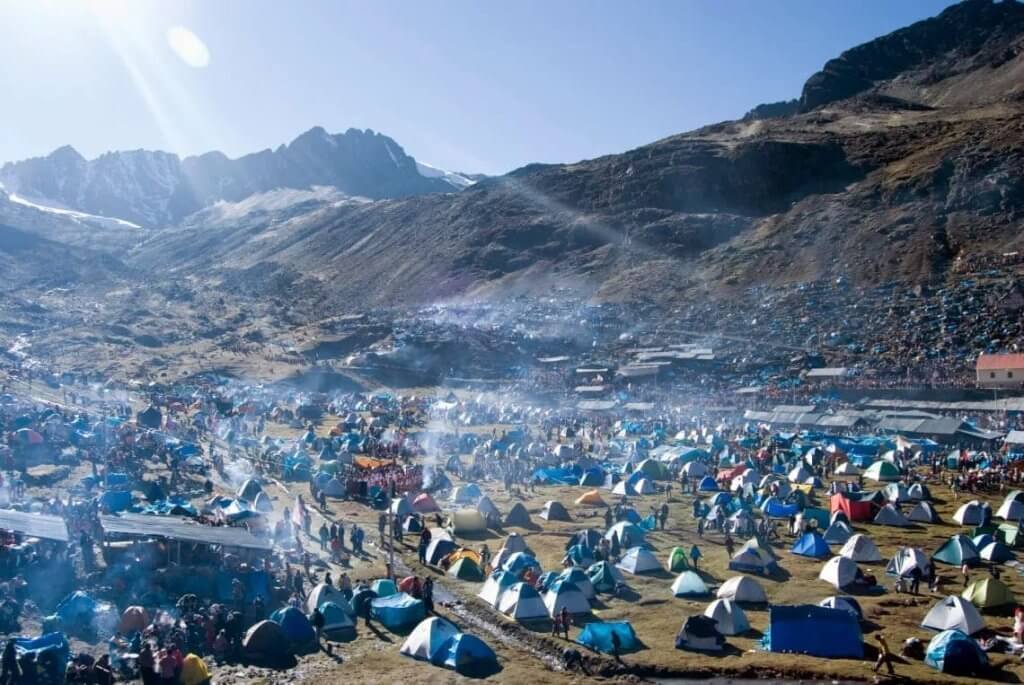
The Pilgrimage: A Journey of Devotion
The Sinakara Valley is not just a sacred place, it is the heart of the Qoyllur Riti Pilgrimage. The journey to this holy site tests both body and spirit.
- Pilgrims begin with a four-hour bus ride from the city of Cusco to Mahuayani. This scenic route offers breathtaking views of the Andes Mountains.
- After arriving in Mahuayani, we trek five miles up to the Sinankara Valley. The trail climbs steeply to over 15,000 feet (4,700 meters), challenging even seasoned hikers.
- Along the path, nine crosses mark each kilometer of the route. At every cross, we stop for a moment to pray and light candles as acts of faith and reflection.
- Many pilgrims carry offerings such as flowers or small tokens symbolizing hopes or gratitude. These items are left at altars along the way, honoring Andean traditions and Catholic beliefs combined.
- We experience biting cold during this climb due to high altitude, but warm spirits keep everyone going together. Traditional songs fill the air as groups move forward singing and drumming.
- Colorful comparsas join us on our trek with vibrant costumes and dances that reflect ancient Andean culture mixed with Christian devotion.
- People from Quechua-speaking communities (or “pilgrim nations”) lead much of this walk; they preserve ritual practices passed down since pre-Columbian times.
Rituals and Syncretism in the Festival
After days of walking through the Andes Mountains, we arrive at the sacred Sinakara Valley. Here begins a blend of traditions that’s both ancient and new. The Qoyllur Rit’i Festival beautifully merges Andean rituals with Catholic practices.
We see pilgrims light candles for blessings while Quechua prayers rise into the crisp air. Nearby, Catholic hymns echo in praise of the Lord of Tayancani.
Pilgrims touch glaciers to seek healing or scoop icy water for purification baths. Early each morning, groups perform ceremonies like carrying symbols tied to their wishes for prosperity—tiny houses or coins made from fake money bought at Alacitas Market stand out among their offerings.
Dance explodes everywhere around us! Traditional costumes swirl as dancers honor Apu Ausangate and celebrate Pentecost under starlit skies, connecting deeply with nature and faith all at once.

The Role of the Comparsas in the Celebration
Comparsas, or dance troupes, bring life and rhythm to the Qoyllur Riti Festival. These groups represent ten “Nations” from Paucartambo, Qusipicanchis, and Tahuantinsuyo. Each Nation wears traditional costumes full of bright colors and rich details.
Their dances honor Andean traditions while blending elements of Catholic rituals.
These troupes lead processions through the Sacred Sinakara Valley. They also take part in rituals filled with deep spiritual meaning. On Mount Sinakara, they stage simulated battles as symbolic acts of faith and unity.
The energy is contagious as drums beat loudly and flutes echo across the valley floor!
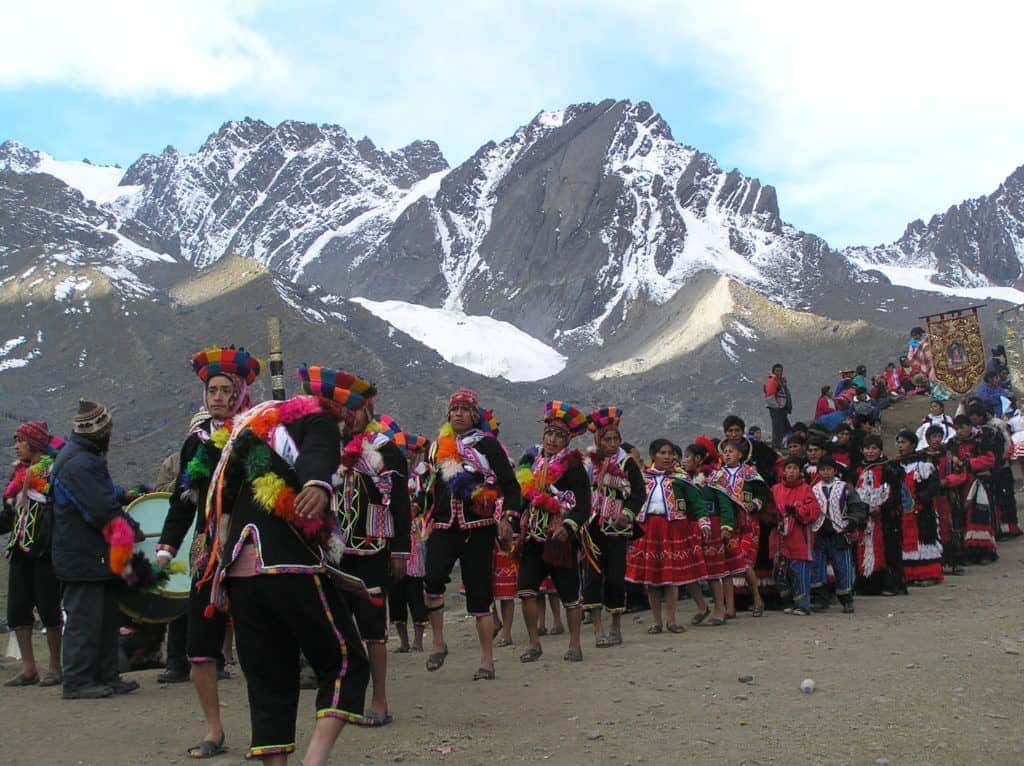
The Ukukus: Guardians of Tradition
The Ukukus, dressed as bears, are the protectors of Qoyllur Rit’i. These men aren’t just performers; they uphold order and keep traditions alive. Known as pabluchas or pablitos, they serve both spiritual and practical roles during the Snow Star Festival.
They carry whips to enforce rules, ensuring no one strays from sacred rituals.
At 4 AM, they climb Sinakara Mountain’s glacier. This is no small task in the freezing Andes Mountains. They pray for healthy livestock while honoring Apu Ausangate and other mountain spirits.
Their courage represents strength and respect for Andean beliefs rooted deeply in Inca culture.
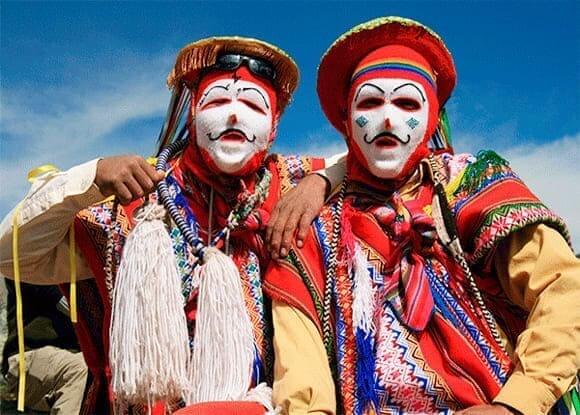
The Alacitas Market: Symbolism in Miniatures
Alacitas Market bursts with life and meaning during the Qoyllur Rit’i Festival. Here, we find tiny replicas of dreams and desires—miniature houses, cars, businesses, weddings. Pilgrims buy these little treasures to symbolize their wishes for real-life success.
Tradition says visiting the market four times boosts a chance of making those dreams come true.
This ritual ties deeply to Andean beliefs in prosperity and abundance. Each miniature carries hope, blending faith with custom. Vendors display colorful stalls near Sinakara Mountain as part of this magical celebration in the Andes Mountains.
It’s not just shopping; it’s like planting seeds for future blessings!
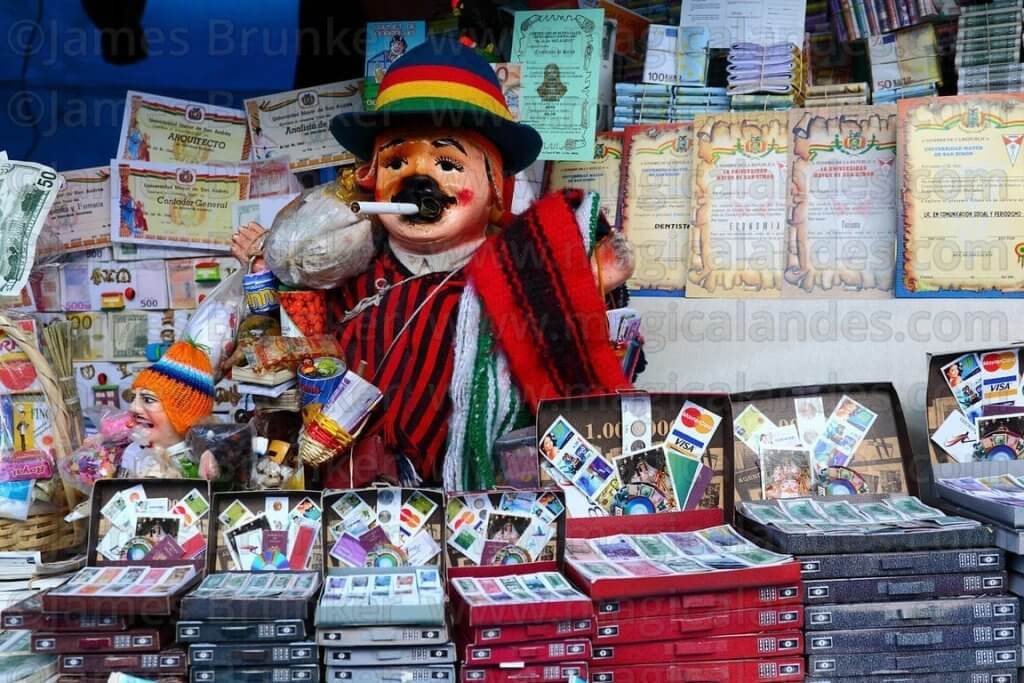
Music and Dance: Expressions of Faith and Culture
Music fills the air for three days at the Qoyllur Rit’i Festival. Traditional tunes mix with the energy of dances like Diablada, Huayno, and Marinera. Each movement and rhythm is a prayer, honoring both Andean traditions and Catholic influences.
The vibrant dances tell stories of faith, joy, and cultural pride.
We marvel at the bright traditional costumes worn by performers. Every color holds meaning; every step reflects devotion to sacred rituals in this part of Peru’s Andes Mountains.
These celebrations don’t stop day or night! The beat pulls everyone together in harmony before leading us to another fascinating part: **The Glacier Ritual** awaits next!
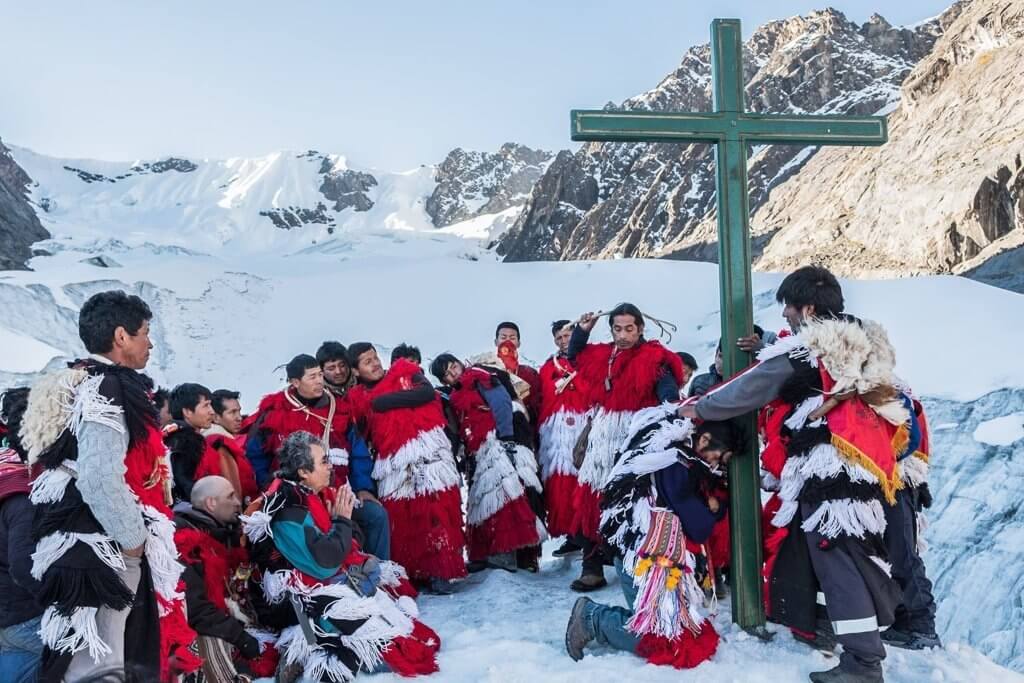
The Glacier Ritual: Connecting with Nature’s Essence
Pilgrims used to collect chunks of glacier ice near Sinakara Mountain. They believed it carried blessings and healing power for their villages. The ice, taken from the sacred Andean glaciers, symbolized a deep connection with nature and tradition.
Today, glacier retreat has ended this practice. Instead, we touch the glacier’s foot during the Qoyllur Rit’i festival to receive blessings. This act reminds us of our bond with Apus, or mountain spirits, and the fragile beauty of these ancient peaks in the Andes Mountains.
The Role of the Apus: Sacred Mountain Spirits
Apus are sacred spirits of the Andes Mountains. They protect us, watch over the land, and bless those who show respect. These powerful spirits live in mountains like Apu Ausangate near Sinakara Valley.
The Quechuas honor them as givers of life and weather controllers.
We see these mountains as homes for deities rooted in ancient Andean traditions. During Qoyllur Rit’i, we pray to them for good crops, health, and harmony with nature. Their connection to humanity is deeply woven into every ritual of this snow star festival.
Climate Change and Its Impact on the Festival
The melting of the Sinakara Glacier has changed ancient traditions. Global warming caused Peru to lose about 30% of its glaciers in just 20 years. This means less snow and ice for rituals like the traditional ice-carrying ceremony during Qoyllur Rit’i.
Pilgrims used to carve blocks of ice from the glacier as blessings, but this sacred act has stopped due to shrinking ice fields. It’s heartbreaking to see nature’s role in faith be affected so deeply by climate change.
Peru holds around 70% of tropical glaciers on Earth, yet they are disappearing fast. Over 35 years, a chilling 22% of these icy giants have vanished. The once-mighty Sinakara Glacier is now retreating higher into the Andes Mountains each year, leaving pilgrims with limited access to their spiritual connection with Apu Ausangate and other spirits tied to snow-covered peaks.
As travelers, we can feel how fragile this bond is between cultural heritage and nature as temperatures rise across our planet.
The Spiritual Significance of the Snow Star
The Snow Star, or Qoyllur, is deeply spiritual in Andean traditions. It connects us to the heavens through the Pleiades constellation, also called the Seven Sisters. This celestial event signals new agricultural cycles in the Andes Mountains.
Farmers see it as a guide for planting and harvesting seasons.
Climbing Sinakara Mountain as part of this festival feels like touching both Earth and sky. The snow atop symbolizes purity, renewal, and our bond with nature. We witness Venus rising at night during this time too; its glow reminds us of guidance and hope amid life’s challenges.
When and Where to Experience the Festival
The Qoyllur Riti Festival is an awe-inspiring event in the Peruvian Andes. It combines faith, tradition, and breathtaking scenery.
- The 2026 festival runs from May 31 to June 3. Corpus Christi follows on June 4. These dates are key for planning your trip.
- It takes place near the sacred Ausangate Mountain in the Sinakara Valley. This spot is about three hours by car from Cusco.
- After driving to Mahuayani, we trek uphill for about 8 kilometers (5 miles). Comfortable hiking shoes are a must here.
- Early mornings offer cooler temperatures for trekking. Setting out at dawn also gives more time to enjoy the rituals.
- The festival includes colorful processions, with pilgrim nations wearing traditional costumes. These groups carry banners and play music along the way.
- Lodging is basic yet cozy near Mahuayani or surrounding areas. Booking ahead ensures a smooth journey closer to the event.
- We recommend packing layers as it gets freezing at night in this high-altitude region of over 15,000 feet above sea level.
- Local guides are helpful when learning about customs or finding routes through Sinakara Valley trails.
- Vendors sell food like tamales and coca tea along the path. These snacks fuel you while climbing toward Sinakara Mountain.
- Visitors can witness ancient rituals merging Andean traditions with Catholic influences under sacred glaciers during these magical days.
Cultural and Heritage Importance of Qoyllur Riti
Qoyllur Riti stands as a vital piece of Peru’s heritage. It blends Andean traditions with Catholic faith, creating an event rich in meaning. Every year, nearly 100,000 pilgrims make the trek to the Sinakara Valley.
This massive gathering has earned it recognition as part of UNESCO’s Intangible Cultural Heritage of Humanity list. We can feel history and spirituality woven into every step during the journey.
The festival preserves pre-Inca practices tied to nature and agriculture. Rituals honor sacred mountains like Apu Ausangate and celebrate celestial events like the Pleiades constellation’s rise.
Traditional costumes and dances highlight Peruvian culture while tying communities together through shared reverence for their roots. It’s a celebration where ancient paths meet modern devotion in vivid colors and ceremony!
Qoyllur Riti Conclusion
Qoyllur Riti is more than a festival—it is a living bridge between ancient Andean spirituality and Catholic devotion. High in the Peruvian Andes, pilgrims unite under sacred mountains, guided by rituals, music, and faith. Despite challenges like climate change, its essence endures: a celebration of devotion, cultural identity, and harmony with nature. To join this pilgrimage is to honor centuries of tradition while experiencing a profound connection with something greater than ourselves. Preserving Qoyllur Riti means keeping alive one of humanity’s most powerful expressions of faith and community
Qoyllur Riti FAQ
What is the Qoyllur Riti Festival?
The Qoyllur Riti Festival, also called the Snow Star Festival, is a sacred celebration in the Peruvian Andes. It honors Andean traditions, blending Incan beliefs with Catholic practices like Corpus Christi.
Where does the festival take place?
It happens in Sinakara Valley near Mount Ausangate in the Andes Mountains. Pilgrims gather at Sinakara Mountain to perform rituals and celebrate their cultural heritage.
Why is this festival important?
The Qoyllur Rit’i represents spiritual devotion and cultural identity for many communities. It’s recognized as an Intangible Cultural Heritage of Humanity by UNESCO due to its deep connection to Andean traditions and history.
What are some key elements of the festival?se European devices with a Type C plug in Peru?
Pilgrims wear traditional costumes, follow sacred rituals, and honor symbols like the Pleiades constellation and Tayanka bush while trekking along ancient Inca trails.
Who participates in this event?
Groups known as “pilgrim nations” come together from different regions of Peru for this fiesta. They pay tribute to Apu Ausangate and Lord of Tayancani through music, dance, and prayer.
How does it connect with nature and astronomy?
The Snow Star Festival celebrates natural cycles tied to constellations like Taurus and Pleiades while honoring mountains considered sacred spirits or apus in Andean culture.

Angel Ponce
Ángel is a passionate traveler and cultural enthusiast with over 5 years of experience in the tourism sector in Peru. Originally trained in Administration, he is currently expanding his expertise by specializing in Software Engineering, combining his love for travel with a growing passion for technology.
Born and raised in Peru, Ángel has always been fascinated by his country's rich cultural heritage, diverse landscapes, and especially its world-renowned cuisine. His early experiences exploring Peru include climbing the majestic Pastoruri Glacier as a child—a memory that sparked his lifelong connection to the country's natural beauty. Today, he enjoys exploring Peru’s coastal gems and sharing his insights with fellow travelers.
Ángel is deeply knowledgeable about Peru's history, traditions, and hidden cultural treasures. He enjoys creating meaningful travel experiences that help visitors connect with the authentic soul of the country. In his free time, you'll often find him diving into programming books, continuously learning and merging his two great passions: technology and travel.
With a unique blend of local expertise, cultural appreciation, and technical skills, Ángel brings a fresh and insightful perspective to Peru’s travel industry.
- Angel Ponce

- Angel Ponce

- Angel Ponce

- Angel Ponce


