


Have you ever stared at the Machu Picchu photos on your screen and thought, “How do I actually get there?” We’ve been there. Picking the best trains to Machu Picchu from Cusco can feel like a lot, especially with so many service classes, stations, and ticket prices for 2026 to sort through.
Here’s a helpful secret: train travel is hands-down the most popular way to reach the citadel. According to a survey cited by Inka Time Tours, more than 70% of visitors choose the train over trekking routes like Salkantay or the Inca Trail.
Need Quick & Easy Trip Planning? We Can Help..


Free Itineraries Based on your Schedule & Budget
Booking Assistance for Hotels, Flights and Transfers
24/7 Customer Support & Personal Travel Advisors
Both PeruRail and Inca Rail run their own trains, stations, and comfort levels along the Sacred Valley of the Incas. The good news is that once you understand what each company offers, the choice gets a lot easier.
We’ve done the research on train types, booking tips, and scenic routes so you can travel with confidence. Let’s walk through everything together, step by step.
Trains To Machu Picchu Table of Contents
Trains To Machu Picchu Key Takeaways
- Peru Rail and Inca Rail are the only train companies offering service from Cusco or Ollantaytambo to Aguas Calientes, with travel times between 1.5 to 3 hours depending on the route.
- Both lines offer several classes, from budget (Expedition/Voyager) to luxury (Hiram Bingham/First Class), each featuring panoramic windows and Andean scenery.
- Booking tickets early online is advised for 2026 due to high demand. Inca Rail provides frequent discounts like PROMO5 for 5% off and IR10 for 10% savings. PeruRail is also offering a 10% discount with coupon code PISCO on their website.
- Luggage is limited to one carry-on bag up to 8 kg per person on all trains, so pack light when traveling through the Sacred Valley toward Machu Picchu.
- Both companies allow flexible date changes and digital ticketing, making trip adjustments stress-free even during busy seasons or last-minute plans.

Overview of Train Travel to Machu Picchu

Getting to Machu Picchu by train is both smooth and scenic. There are two main options: PeruRail and Inca Rail. These trains link Cusco, Ollantaytambo, and the vibrant village of Aguas Calientes, often called Machupicchu Pueblo.
The ride from Ollantaytambo station to Aguas Calientes takes about an hour and a half. If you start from Cusco (Poroy), expect a trip closer to three hours. Along the way, most routes travel through the Sacred Valley of the Incas, with mountain views all around and flashes of the Urubamba River just outside your window.
One thing worth knowing: there is no train station at the Inca citadel itself. Both PeruRail and Inca Rail bring you to Aguas Calientes, and from there, a short bus ride of about 20 to 25 minutes takes you up to the Machu Picchu entrance. Budget an extra $24 round-trip for that Consettur shuttle when planning your total costs.
For 2026, train costs range from around $80 round-trip for economy service to $500 or more for an all-inclusive luxury experience, with most visitors choosing mid-range options in the $140 to $180 round-trip range, according to pricing data from machupicchu.org. Booking 2 to 3 months early can save you 20 to 30% compared to last-minute fares.
You can buy one-way or round-trip tickets online from anywhere in the world. That gives travelers plenty of flexibility, especially those planning hikes like the Salkantay or Lares trek before or after visiting Machu Picchu. Baggage rules allow only one carry-on bag up to 8 kg per person, so packing light really pays off.
Seat classes range from simple rides to luxury experiences like the Belmond Hiram Bingham or elegant carriages such as the Vistadome or The 360°. On board, you’ll meet hikers fresh off the Inca Trail, families heading for the Santa Teresa hot springs, and explorers stopping at Hidroeléctrica station.
With so many choices between services and stations, including Ollantaytambo, Urubamba, and Poroy, it helps to explore what each company offers before booking your seat.
PeruRail: Services and Features
PeruRail has been operating for over 20 years, making it the more established of the two companies. More than just a ride to the ruins, PeruRail offers scenic windows, comfortable seats, and sharp service on the way to Machu Picchu. Each train brings you closer to ancient Incan wonders while rolling through the Sacred Valley.
Expedition Train
The Expedition Train is the best option for those of us who want to visit Machu Picchu without breaking the bank. With large side windows, we can take in views of the Sacred Valley and catch glimpses of Incan ruins along the way. The interiors are decorated with Inca-inspired paintings, giving even the budget ride a sense of place.
Tickets start at around $55 to $75 one way from Ollantaytambo, making this train a favorite for budget-conscious travelers. We can board at Cusco or Ollantaytambo stations, so it’s easy to fit into our travel plans no matter where we stay in the region.
Snacks and drinks are available for purchase onboard. The seats offer basic comfort, nothing fancy, but they get us from point A to B with decent legroom and a carry-on bag limit of 8 kg. A smart insider tip: many travelers book the Expedition going to Aguas Calientes and upgrade to the Vistadome on the return, when the cultural show and wider views are most appreciated after a long day at the ruins.
Many fellow passengers choose this route just for its affordable Machu Picchu train prices 2026, leaving more cash in their pockets for exploring Aguas Calientes or booking day hikes like Huchuy Qosqo after arrival. PeruRail also runs more than 23 daily departures to Machu Picchu, giving the Expedition the most scheduling flexibility of any single train option.

Vistadome Train
Moving up from the Expedition, the Vistadome hits a sweet spot for comfort and views. Large panoramic windows line both sides and even arc into the ceiling, flooding the cabin with sunlight. The Vistadome costs roughly $70 to $100 one way, a step up from the Expedition but a major leap in the view experience.
We feel connected to the Sacred Valley as farmland rolls past beside tall Andean peaks. Live Andean music and dance often fill the car with energy, and on select return journeys, passengers enjoy a short cultural fashion show featuring baby alpaca garments. Snacks and hot drinks keep everyone cozy along the way.
Photography fans get a real treat here. Those wide ceiling windows are perfect for snapping photos of Urubamba’s lush scenery or snow-capped mountains along both Cusco and Ollantaytambo routes. With complimentary refreshments included in the fare, we relax, gaze outside, and arrive at Aguas Calientes ready to explore Machu Picchu.

Vistadome Observatory
PeruRail also offers a step up from the standard Vistadome called the Vistadome Observatory. This service adds a dedicated observatory car with an open-air balcony and expansive panoramic windows for uninterrupted views of the Andes. Live musicians and dancers perform onboard, and the experience even includes a midway stop near Huaypo Lake, where passengers can spot the glaciers of the Salkantay mountain range on daytime journeys.
It’s a strong middle-ground option for travelers who want more than the standard Vistadome without committing to the full Hiram Bingham price tag.

Luxury Hiram Bingham Train
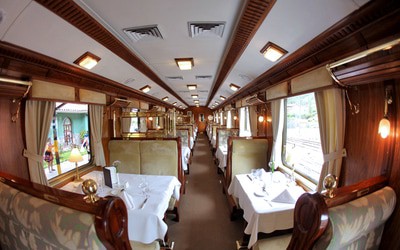
Stepping up from the Vistadome, we find PeruRail’s Belmond Hiram Bingham. With its distinctive blue and gold livery, this luxury journey stands out on the tracks between Cusco or Urubamba Station and Machu Picchu Pueblo.
Every detail feels top-class here. Gourmet dining greets us as soon as we sit down, with white tablecloths and polished cutlery setting the scene. The menu is crafted by chef Jorge Muñoz, blending local Andean flavors with haute cuisine. Passengers enjoy wine pairings with their meals while live music adds a cheerful touch.
There is a dedicated bar car for fresh cocktails and an open observation car where we can soak in mountain views without glass between us and nature. Priority boarding, spacious Pullman-style seats modeled on 1920s carriages, and an exclusive afternoon tea at the Sanctuary Lodge on the return journey round out the experience. At around $500 one way, this is by far the most expensive train to Aguas Calientes. The Hiram Bingham typically departs on Thursdays, Saturdays, and Sundays.
Onboard, we feel like explorers getting royal treatment with every sunset toast.
Inca Rail: Services and Features
Inca Rail launched in 2009, about a decade after PeruRail, but it has carved out a strong reputation for modern carriages, cultural touches, and competitive pricing. We can hop on Inca Rail for a cozy ride through the Sacred Valley, plenty of windows for views, and even special snacks. Here’s how each service compares.
The Voyager Train
The Voyager Train by Inca Rail keeps things simple yet pleasant. We settle into soft seats, gaze at the Sacred Valley through wide windows, and listen to cheerful Andean music along the way. Pricing comes in slightly lower than the Expedition at around $50 to $70 one way, making it a genuine budget alternative worth comparing.
Attendants pass down snacks and drinks for sale while we roll on toward Machu Picchu. Digital ticket confirmation arrives right after booking, which saves time and
fuss. The service leaves from both Cusco via a bimodal bus transfer, or directly from Ollantaytambo if that fits our plans better.
One practical advantage of Inca Rail: their carry-on limit is 8 kg, matching PeruRail, but some Inca Rail service tiers allow slightly larger bags. For a relaxed trip with all the must-haves included, The Voyager checks those boxes well in the PeruRail vs Inca Rail debate.
The 360° Train
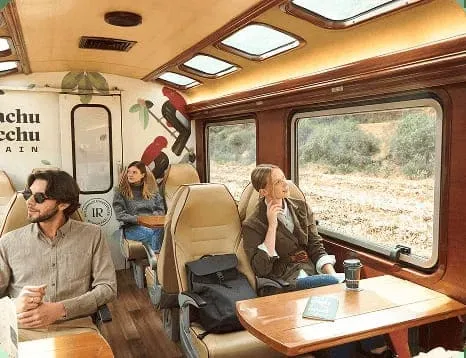
Glass walls curve around us, turning Peru’s Sacred Valley into a moving postcard. Panoramic windows paired with an outdoor observation car steal the show on The 360° Train from Inca Rail. This service costs around $70 to $90 one way, putting it in direct competition with the PeruRail Vistadome at similar price points.
UV-protected glass keeps us cool even under Andean sunbeams. Sun pours in through the ceiling and walls, giving us sweeping views of mountains and rivers while we chill indoors or step out to breathe the fresh air. The 360° also features an onboard infotainment platform with messaging Wi-Fi, an added perk not found on all competing services.
Live musicians play Andean tunes, and a blessing ritual sets a thoughtful tone for the trip to Machu Picchu. We munch on local snacks and sip warm included beverages without reaching for our wallet again. Promo code IR10 knocks 10% off the ticket price, which adds up nicely given everything rolled in.

First-Class Experience
Passengers in First Class on Inca Rail glide through the Sacred Valley with wide seats, plenty of legroom, and attentive service. The three-course gourmet meal, paired with wines, sets a high bar for train dining. Prices typically run $95 to $120 one way, making it a genuine luxury option at a somewhat lower entry point than the Belmond Hiram Bingham.
We savor the special Wine Ceremony as we cross lush valleys and ancient peaks. Live saxophone music fills the dedicated bar-lounge car. Priority boarding and exclusive welcome cocktails are included in both The Prime and First Class tickets.
Promo codes IR10 or PROMO5 help us save up to 10% on these premium trips when booking online. This ride offers comfort that rivals any five-star hotel, with views worth every penny, right before a hiking adventure at Machu Picchu awaits.

Key Differences Between PeruRail vs Inca Rail
We’ll break down the main differences travelers spot between PeruRail and Inca Rail as we head to Machu Picchu. The table below highlights what truly sets them apart, including 2026 pricing so you can make a clear, cost-driven decision.
| Feature | PeruRail | Inca Rail |
|---|---|---|
| Service Classes | Expedition Vistadome Vistadome Observatory Hiram Bingham (Belmond luxury) | Voyager The 360° First Class / The Prime |
| 2026 Price Range (one way) | Expedition: ~$55-$75 Vistadome: ~$70-$100 Hiram Bingham: ~$500 | Voyager: ~$50-$70 The 360°: ~$70-$90 First Class: ~$95-$120 |
| Highlights | Iconic Hiram Bingham with chef-crafted gourmet dining. Runs classic panoramic Vistadome with ceiling windows. Over 23 daily departures for maximum flexibility. | The 360° has an outdoor observation car and Wi-Fi messaging. Focus on personalized service and cultural touch. Instant digital ticketing and itinerary. |
| Departure Stations | Cusco (Poroy, Wanchaq, San Pedro) Ollantaytambo Urubamba | Cusco (bus transfer to Ollantaytambo) Ollantaytambo |
| Booking System | Online booking available 24/7. Physical and digital ticket options. Use code PISCO for 10% off. | Online booking with instant digital tickets. Itinerary sent right after purchase. Use codes PROMO5, IR10, INCA50. |
| Discounts | Code PISCO: 10% off 2026 bookings. Seasonal savings available. | PROMO5: 5% off any ticket. IR10: 10% off The 360° and The Prime. INCA50: 50% off for Peruvian citizens. |
| Luggage Allowance | 1 carry-on, max 8 kg, 115 cm total dimensions | 1 carry-on, max 8 kg (some tiers slightly more) |
| Cultural Aspect | Fashion show and folkloric dance on Vistadome. Live music on Hiram Bingham and Observatory. | Blessing ritual on The 360°. Live saxophone in First Class bar lounge. |
Ticket Booking Tips and Discounts
Snagging tickets for the Machu Picchu train is straightforward with a few smart moves. Shopping early pays off in both seat selection and savings. Here’s what we recommend.
According to dynamic pricing data from machupicchu.org, tickets purchased within 2 to 4 weeks of travel often cost 40 to 50% more than the same class booked 2 to 3 months ahead. Book early, save big.
- Book online as soon as we know our dates, because trains fill up fast, especially during high season (May to September) along the Sacred Valley. Popular morning departure slots, like 6:10 AM and 7:05 AM from Ollantaytambo, sell out first.
- Use coupon code PROMO5 at checkout on Inca Rail’s website to grab 5% off any ticket, even if it’s just one way.
- Choose a roundtrip journey with Inca Rail, and watch an extra 5% discount automatically appear in the final price.
- Select The 360° or The Prime services on Inca Rail, punch in code IR10, and save another 10% right from our phones or laptops.
- If we are Peruvian citizens, code INCA50 lets us cut fares by half for some real home-team savings.
- PeruRail is currently offering a 10% discount with code PISCO for 2026 train bookings through their official website.
- We can buy tickets anytime, even from our couch at midnight. Digital confirmation lands in our email within minutes.
- Plans change? Dedicated customer support at both companies allows us to tweak travel dates or switch trains without breaking a sweat.
Train Routes and Departure Points
Getting to Machu Picchu by train means choosing your route wisely. We need to pick our departure point based on comfort, timing, and our Sacred Valley plans.
- Most travelers leave from either Cusco’s Poroy station or Ollantaytambo, the hub of the Sacred Valley. Note that Poroy station typically operates from May to December (dry season), while Wanchaq serves the bimodal service from January to April.
- The Cusco (Poroy) to Aguas Calientes line stretches about 3 to 4 hours, giving us plenty of time to soak in those mountain views.
- Catching the train at Ollantaytambo slices travel time to just 1.5 hours to Aguas Calientes. It fits perfectly for those already staying near the Sacred Valley.
- Departures starting from Ollantaytambo also cost $30 to $50 less than equivalent service classes leaving from Poroy or Cusco, according to machupicchu.org pricing data.
- All departures require early arrival. We should get to the station at least 30 minutes before the train leaves. Bringing your passport is required to board.
- Getting from Cusco center to Ollantaytambo involves a 1.5 to 2-hour bus or taxi drive before we even see tracks, so planning ahead is key for smooth connections.
- Tickets come as one-way or round-trip options. Flexibility helps if we want a slow wander through Inca treasures or plan to hike back on the Inca Trail.
- Choosing Ollantaytambo as our starting point shaves off transfers and makes it easy if our journey includes stops in ancient valley towns like Urubamba or Pisac first.
Essential Guide to Aguas Calientes (Machu Picchu)
Aguas Calientes, called Machu Picchu Pueblo by locals, is more than a train stop. This town marks the last stretch before we board a bus to reach the gates of Machu Picchu itself. Our adventure often starts or ends on these winding streets filled with small hotels, cheerful cafés, and lively markets selling alpaca scarves and chocolate bars we’ll crave long after leaving Peru.
The official Consettur bus from Aguas Calientes to the Machu Picchu entrance costs $24 round-trip for foreigners and takes about 20 to 25 minutes. Tickets are easy to add when booking our ride from Cusco or any Sacred Valley village using PeruRail or Inca Rail systems.
Many all-inclusive travel packages roll sleep and site entry into one tidy bundle here. Late afternoon trains drop us at Aguas Calientes just in time for a hot shower and an early night’s rest, perfect if we want fresh legs for sunrise at the ruins. A morning arrival means a same-day visit to Machu Picchu is absolutely possible.
With so many choices for meals and places to relax, staying overnight becomes part of what makes exploring this green pocket of the Andes magical for every traveler’s pace. Budget-friendly menus in town start from as little as 10 soles, making it easy to eat well without overspending.

Travel Experience: Scenery and Comfort
Bright green hills, sharp cliffs, and winding rivers sweep past as we journey through the Sacred Valley to Machu Picchu. The Andean landscapes on this route are genuinely hard to overstate.
The 360° train, with its huge panoramic windows and outdoor viewing car, feels like a moving balcony. Fresh air fills our lungs while we snap photos in soft morning light. UV-protected glass keeps us cool even under Andean sunbeams.
Live Andean or saxophone music floats down the aisle on premium services. It turns our ride into something we’ll talk about at family dinners for years. On board the Voyager or Expedition trains, wide side windows frame patchwork farms and ancient terraces without missing a beat.
Plush seats cradle us on Inca Rail’s First-Class Experience or PeruRail’s Hiram Bingham service, so kicking back comes easy after long sightseeing days. Attendants pass around traditional snacks and hot Peruvian coffee just when hunger strikes. We can slip between laughter in cozy groups and silently gaze out across emerald slopes dotted with llamas below.
Each moment is shaped by comfort and scenery that only this railway adventure delivers through Peru’s wild heartland.
Additional Tips for a Smooth Journey
Traveling to Machu Picchu by train is exciting, so a little planning goes a long way. These practical tips will make the trip even smoother.
- Arriving at the departure station at least 30 minutes ahead lets us handle check-in and boarding without stress. Bring your passport, as it’s required to board both PeruRail and Inca Rail trains.
- Departures from Cusco often need a two-hour bus ride to Ollantaytambo, so we should factor that into our schedule. Starting from Ollantaytambo directly saves both time and money.
- Digital or printed tickets keep boarding easy. Showing them on our phones or on paper works fine for both PeruRail and Inca Rail staff.
- Reviewing updated train schedules before booking helps us pick the best time, whether we want an early start or a late return. High season runs May through September, when popular times sell out weeks in advance.
- Packing light is smart since each train allows only one carry-on bag up to 8 kg. Leave bigger luggage at your accommodation in Cusco or Ollantaytambo.
- Booking tickets online offers flexibility. One-way or round-trip options can be chosen based on our needs and plans for the Sacred Valley.
- If changes are needed, both train companies provide quick customer support for shifting travel dates or services without fuss.
- Bringing snacks and water ensures comfort during the journey, because onboard choices may be costly or limited on basic service trains.
- Adding Machu Picchu entry tickets to our train booking saves time and headaches later at crowded ticket offices in Aguas Calientes. As of 2026, Machu Picchu entry must be purchased separately through the official platform at tuboleto.cultura.pe, and tickets cost around $50 per adult for standard circuits.
Machu Picchu Full Day Tour
After mastering those travel hacks, we can truly make the most of a Machu Picchu full day tour. Inca Rail removes any guesswork with its all-inclusive packages. These deals roll train rides, bus tickets, entrance to Machu Picchu, and guided tours into one tidy bundle.
We get digital tickets and a full itinerary right in our emails, with no fiddling around or waiting for confirmation. Some packages even let us add on extra stops like the Sacred Valley or Rainbow Mountain for more adventure.
The guides speak clear English and handle every detail throughout the journey. One thing to keep in mind for 2026: Machu Picchu no longer allows free-roaming inside the site. Visitors must enter via designated circuits that direct foot traffic and protect the ruins. Circuit 2 is widely considered the most complete traditional route, covering the Sacred Plaza, the Temple of the Sun, and the classic postcard viewpoint.
With everything pre-arranged by Inca Rail, all we need is a good pair of shoes and some energy. We’re ready to uncover ancient ruins before sunset.

Inca Trail to Machu Picchu
The Inca Trail draws hikers from all over the globe. Hiking it is a real adventure, full of challenge and rich rewards.
- A permit for the Inca Trail is required. Strict rules cap walkers to 500 per day total, including guides and porters. Of that number, only about 200 spots are available for actual travelers, with the rest going to cooks, guides, and porters.
- Trekking the trail means four days of mountain paths, ancient stone steps, and dense cloud forests, ending at Machu Picchu’s Sun Gate. The route covers roughly 26 miles (about 45 km) and reaches its highest point at Dead Woman’s Pass at 13,828 feet (4,215 meters).
- For peak dry season months, specifically May through August, permits sell out in a matter of hours or days once sales open. Booking 6 to 8 months in advance is strongly recommended for those dates, according to data from Salkantay Trekking and multiple permit operators.
- Starting in 2026, Inca Trail permits no longer include entry to Machu Picchu itself. Travelers must now purchase a separate Machu Picchu entry ticket, adding at least $50 per person to the overall cost. Both tickets must be managed independently through their respective booking systems.
- Many adventurers hike into Aguas Calientes on foot and then use PeruRail or Inca Rail trains for the return journey to Cusco or Ollantaytambo.
- Both rail services offer flexible one-way tickets for trekkers needing just a ride back after reaching the ruins.
- Travelers who prefer a shorter walk can pick partial routes that combine hiking with a train ride along the Sacred Valley. Alternatives like the Salkantay Trek, Lares Trek, and Inca Jungle route do not require trail permits and offer more booking flexibility.
- Combining trekking with train travel means experiencing both breathtaking wild scenery and relaxing comfort on Peru’s rails after finishing the journey on foot.
Trains to Machu Picchu Conclusion
Choosing between PeruRail and Inca Rail is like picking the best seat at a concert. Both take us through the Sacred Valley with comfort, great service, and scenery that grabs your heart.
Some love luxury, some need quick booking or special deals for the train to Machu Picchu from Cusco. We just want a smooth ride to Machu Picchu with memories worth telling back home. No matter which train whisks us away, adventure waits on those tracks.
Trains to Machu Picchu FAQ
Can I take a train to Machu Picchu from Cusco through the Sacred Valley?
Yes, you can ride with either PeruRail or Inca Rail straight through the stunning Sacred Valley. We always recommend grabbing a window seat on the PeruRail Vistadome, as its panoramic glass roof gives you a spectacular view of the Andes mountains.
Which train service is better, PeruRail or Inca Rail?
Neither is strictly better, as your choice depends entirely on your travel schedule and personal style. We find that PeruRail gives you maximum flexibility with its frequent daily departures, whereas Inca Rail provides a fun, intimate atmosphere with live Andean music on their 360 Degree train.
How far in advance should I book my train tickets?
You should book your train tickets at least four to six weeks in advance, especially if you plan to visit during the dry season from May to October. Our team sees popular morning departures sell out months ahead of time, so securing your seats early guarantees your spot and gives you total peace of mind.
Does the train stop in the Sacred Valley before reaching Machu Picchu?
The train does not make sightseeing stops in the Sacred Valley, but since it picks up passengers at the Ollantaytambo station, we highly recommend planning a separate day trip to explore those local ruins.

Angel Ponce
Ángel is a passionate traveler and cultural enthusiast with over 5 years of experience in the tourism sector in Peru. Originally trained in Administration, he is currently expanding his expertise by specializing in Software Engineering, combining his love for travel with a growing passion for technology.
Born and raised in Peru, Ángel has always been fascinated by his country's rich cultural heritage, diverse landscapes, and especially its world-renowned cuisine. His early experiences exploring Peru include climbing the majestic Pastoruri Glacier as a child—a memory that sparked his lifelong connection to the country's natural beauty. Today, he enjoys exploring Peru’s coastal gems and sharing his insights with fellow travelers.
Ángel is deeply knowledgeable about Peru's history, traditions, and hidden cultural treasures. He enjoys creating meaningful travel experiences that help visitors connect with the authentic soul of the country. In his free time, you'll often find him diving into programming books, continuously learning and merging his two great passions: technology and travel.
With a unique blend of local expertise, cultural appreciation, and technical skills, Ángel brings a fresh and insightful perspective to Peru’s travel industry.
- Angel Ponce

- Angel Ponce

- Angel Ponce

- Angel Ponce


