

Have you ever read a travel guide and thought, “I already know all of this”? We feel you. So many lists of fact about Machu Picchu recycle the same tired trivia over and over again.
We went digging for the real stuff. Did you know that more than half of Machu Picchu’s engineering magic is actually hidden underground? That buried skeleton of rock and drains is what keeps the whole city safe from mudslides and earthquakes.
Need Quick & Easy Trip Planning? We Can Help..


Free Itineraries Based on your Schedule & Budget
Booking Assistance for Hotels, Flights and Transfers
24/7 Customer Support & Personal Travel Advisors
Our collection goes well past common trivia. We’re sharing real history, amazing culture, clever building tricks, and old mysteries that most travel guides skip entirely. Let’s get into the stories that will actually surprise you.
Table of Contents

Key Takeaways Fact about Machu Picchu
- Over 60% of Machu Picchu’s engineering structure, including deep foundations and drainage, remains hidden underground, preventing landslides and ensuring stability during earthquakes.
- Yale University returned more than 40,000 Inca artifacts to Peru between 2011 and 2012 after keeping them for nearly a century since Hiram Bingham’s expeditions from 1912 to 1915.
- The name “Machu Picchu” only refers to the mountain. No one knows the true original name of the city built by Pachacutec around 1450.
- Recent LIDAR scans revealed over 12 previously unknown structures near the site. Experts estimate about 80% of Machu Picchu is still unexcavated under dense jungle.
- UNESCO designated Machu Picchu as a World Heritage Site in 1983 and now enforces a strict daily limit of up to 5,600 visitors due to overtourism concerns.

Engineering Marvels (Facts 1-5)

To really appreciate Machu Picchu, we need to see it as the Inca engineers did. They built this city in the 1400s without wheels, iron tools, or even help from horses and oxen.
Each stone fits so tightly using ashlar techniques that not even a piece of paper can slide between them. Over half of what we call “Machu Picchu” sits underground, with layers of rock and drains keeping everything dry and safe from mudslides in the Sacred Valley.
Earthquakes shake Peru often, but these stones actually dance during tremors before settling right back into place. The Intihuatana stone still stands alone among all Inca ruins. Spanish conquerors wiped out every other ritual pillar they found across the Andes.
Most visitors only see what’s above ground, yet deep foundations and terraces make up almost 60 percent of this masterpiece’s true size.
We walk on history here. The work is mostly hidden under our feet.
Built in Less Than 100 Years, Then Abandoned, With No Wheels, Iron, or Animals
The Inca Empire amazed the world by building Machu Picchu in less than a century, right on steep Andean peaks. No wheels rolled here, no iron tools clanged, and not a single horse or ox hauled those massive stones.
Incan engineers used only simple tools made of bronze and stone. Local laborers moved granite blocks up from quarries using clever ramps and teamwork. Sometimes entire communities pitched in for months at a time as part of their mit’a labor system.
Signs everywhere show this city was planned to face tough mountain weather. Terracing kept hillsides stable while canals brought fresh water from mountain streams. Despite all that skill and hard work, people left Machu Picchu within just decades after it rose above the Urubamba Valley around 1450.
A 2021 study led by Yale archaeologist Richard L. Burger used advanced radiocarbon dating on human remains from the site. It found Machu Picchu was actually in use from about A.D. 1420 to A.D. 1530, making it at least 20 years older than the accepted historical record suggests. That discovery rewrites what we thought we knew about Inca chronology.
Now its dry-stone architecture sits quietly among the clouds near Cusco. Llamas graze where royalty once strolled under Pachacutec’s command. No other site captures classical Inca style quite like this lost city does today: built fast, abandoned early, but always legendary.
The Ashlar Technique: Stones That Fit Without Mortar
Building Machu Picchu in under a century, without iron tools or draft animals, sounds remarkable enough. Then you see the walls, and it gets even more impressive.
Stones fit so snugly using the ashlar technique that not even a sheet of paper slides between them. These are not small rocks, either. Each block is cut from local granite and crafted by hand for perfect alignment.
- No mortar holds the stones together. Gravity, skill, and clever engineering do the work instead.
- During tremors, blocks shift slightly and then settle right back to their original spots.
- The technique is visible across important structures like temples, city walls, and the Temple of the Three Windows.
- This same tight stonework gave Machu Picchu the flexibility to survive centuries of seismic activity.
We can spot this classical Inca style all over the site. Both beautiful and practical, this masonry showcases Inca civilization at its peak of creativity. It’s one reason experts call it an enduring wonder among world heritage sites today.
60% of the Construction Is Underground: Anti-Landslide Foundations and Drainage
Those perfectly joined stones on top are only half the story. Beneath our feet, about 60% of Machu Picchu’s true body lies hidden underground. This skeleton includes deep anti-slip foundations and a clever drainage system.
Ingenious Inca engineers carved layers of gravel and stone that whisk away heavy rainfall, stopping landslides before they start. Terraces snake along steep slopes like green staircases, protecting soil from washing into the valley below.
The site sits right over fault lines in the Andes near Cuzco, Peru. Those invisible bones act as natural drains and supply stone for dry masonry work. Machu Picchu receives over 79 inches of rain every year, and yet that buried drainage network keeps the ground dry and stable through every rainy season.
Our walk across the grass today owes everything to these ancient tricks beneath Machu Picchu’s famous surface.

The Intihuatana: The Only Intact Inca Solar Stone, All Others Destroyed by Spain
The Intihuatana at Machu Picchu is the only Inca solar stone that survived Spanish destruction. Its name comes from Quechua, where “Inti” means sun and “huatana” means mooring post. So it translates to “the post where the sun is tied.”
Carved directly from the bedrock at the highest point of the citadel, this stone served as both an astronomical instrument and a ceremonial focal point. Priests used it to track solstices and equinoxes for planting and harvest cycles. On June 21, the stone casts its longest shadow to the south. On the equinoxes, the sun stands almost directly above the pillar, casting almost no shadow at all.
“Only very privileged people could get to Machu Picchu, because it was a very special place.” – Dominika Sieczkowska, University of Warsaw Center for Andean Studies
At sites like Ollantaytambo and Vitcos, Spanish conquistadors destroyed these sacred stones almost completely. That’s exactly why the Intihuatana here is so extraordinary. It’s a one-of-a-kind window into Inca astronomy and spirituality. Worth noting for any visitor: the stone is only accessible between 7 and 10 a.m. each day, so plan accordingly.

Designed to Survive Earthquakes: The Stones Shift and Return
Machu Picchu may sit on active earthquake faults, but Inca builders saw this as an advantage. They chose the spot specifically for access to fractured rock and then used ashlar masonry, fitting stones so tightly that not even a sheet of paper slips between them.
During earthquakes, these giant granite blocks shift and wiggle, then settle right back into place. No mortar holds them together. Instead, their perfect fit lets gravity do the job.
Trapezoidal doors and rounded corners help buildings flex under pressure instead of collapsing. Over 60 percent of the construction hides below ground as foundation and drainage systems that keep soil from sliding away during tremors or heavy rain.
We can thank this smart Inca engineering for Machu Picchu still standing after centuries, surrounded by mountains like Huayna Picchu and Salkantay in Peru’s seismic Apurimac Valley.

History and Mystery (Facts 6-10)
Earthquakes may shake the stones, yet the mysteries hidden here stir us even more. Hiram Bingham III arrived in 1911, guided through thick forest by Melchor Arteaga. To his surprise, local families were already living among these ancient walls.
Forty-four years before that famous trip, explorer Augusto Berns made his own visit in 1867 and even mapped out sections for mining. Yale University shipped away hundreds of artifacts after Bingham’s expeditions and kept them nearly a century. Only between 2011 and 2012 did those treasures return to Cusco for all Peruvians to welcome home.
No carved stone or record reveals the true purpose of this site. Most experts point to Pachacuti Inca Yupanqui building it as a royal retreat during the height of the Inca Empire. Our maps call it Machu Picchu for its nearby mountain peak, but studies say “Huayna Picchu” or simply “Picchu” could be closer to its original name. No one knows for sure, since written records from that time never surfaced.
Local knowledge runs deep here. Agustin Lizarraga scratched his name into the Temple of the Three Windows way back in 1902, long before global fame reached these terraces high above Aguas Calientes.
Bingham Didn’t “Discover” Anything: He Was Guided by Melchor Arteaga, and Local Families Were Already There
Hiram Bingham did not stumble upon Machu Picchu alone. He arrived in 1911, guided by Melchor Arteaga, a local farmer who led him up the rugged trails of the Andes. At that time, families were already living among ancient walls and farming the agricultural terraces near Machupicchu mountain.
Agustin Lizarraga visited the site before Bingham ever set foot there. Even Charles Wiener tried to reach it years earlier but never quite made it.
Long before tourists filled train cars or trekked the Inca Trail from Cuzco, locals had deep roots here. They grew crops on andenes built by their ancestors and knew every stone in those ruins hidden under dense vegetation.
The city we now call Machu Picchu was no secret waiting for foreign explorers. It was always part of daily life for those who called this protected area home.

Augusto Berns Visited the Site in 1867, 44 Years Before Bingham
Augusto Berns reached Machu Picchu in 1867, beating Hiram Bingham by 44 years. He is widely credited with the first modern rediscovery of this ancient Inca site deep in the Andes. Some accounts suggest he even tried to profit from Machu Picchu’s lost treasures during the late nineteenth century.
Maps mentioning Machu Picchu started to appear as early as 1874, showing that knowledge of the site was not a big secret among explorers or treasure hunters. Our history books often spotlight Bingham, but Agustin Lizarraga also explored Machu Picchu much earlier, visiting in 1902 and famously scratching his name into the Temple of the Three Windows.
Berns’ journey stands out because it proved that awareness about this marvel existed decades before its “official” discovery and long before Yale took artifacts abroad for study.

Yale Held the Artifacts for 100 Years: Returned Between 2011 and 2012, Now in Cusco
Yale University kept over 40,000 Machu Picchu artifacts for nearly a century. These pieces left Peru right after Hiram Bingham’s digs from 1912 to 1915. Pottery, tools, jewelry: the real treasures of the Inca civilization sat in museum storage far from home.
After years of talks and pressure from Peruvian leaders including Eliane Karp, Yale agreed in 2007 to send them back. According to Yale News, the university and the Peruvian government reached a formal accord in November 2010, and all human remains and archaeological materials were subsequently returned to Cusco. The handover was completed between 2011 and 2012.
Today, visitors can see these relics at the Machu Picchu Museum-Casa Concha in Cusco, not locked away in New Haven but part of living history once more. Nobody knows for sure why Machu Picchu was built or abandoned either, which makes those artifacts even more precious.

Nobody Knows Why It Was Built: The Most Accepted Theory Is Pachacutec’s Summer Residence
No one can say for sure why Machu Picchu was built. The most accepted idea is that it served as the summer residence of Inca emperor Pachacutec around 1450, right in the high cloud forests above the Urubamba River.
Some archaeologists point out its split into two main sectors: a farming zone and an urban sector filled with temples like the Temple of the Sun and astronomy platforms such as the Intihuatana stone.
A 2021 radiocarbon study led by Yale’s Richard L. Burger placed its occupation from roughly A.D. 1420 to 1530, suggesting the site may even predate Pachacutec’s commonly accepted rise to power. That finding, published in the journal Antiquity, supports the idea that the historical timeline we’ve relied on, based largely on Spanish colonial records, needs revision.
Many signs point to luxury and status: a hidden location, lush surroundings, and advanced Inca architecture suggest this was no ordinary village. Royal kanchas or palace walls stand inside, supporting the theory about Pachacutec’s private retreat where he could escape city life with his court during wet months.
Since no records survived in either Quechua or Spanish, mystery remains at every corner among these impressive stones.

“Machu Picchu” Is the Name of the Mountain, Not the City: The Original Name Is Unknown
Many travelers think “Machu Picchu” means the lost Inca city, but it actually names the mountain itself. The real name of the ancient site remains a mystery. No stone inscription or old map tells us what the Incas called their city.
Hiram Bingham named it after following Melchor Arteaga to the site in 1911, and locals used “Machu Picchu” for the nearby peak. Ancient Quechua words: “machu” (old) and “pikchu” (peak), describe only its rugged slopes.
We can still spot Machu Picchu Mountain towering above terraced fields, temples, and houses. To this day, no archive reveals an official title for these legendary ruins hidden within Peru’s green cloud forest. That unknown name adds one more layer of intrigue to one of history’s most spectacular sites.

Astronomy and Water (Facts 11-13)
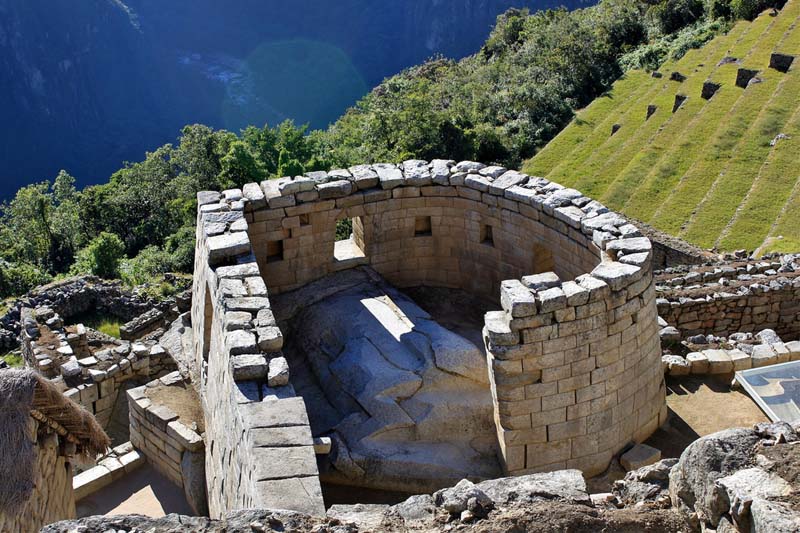
The Temple of the Sun stands out in Machu Picchu history facts. This semicircular structure lines up almost perfectly with the June solstice and March equinox, proof of Inca astronomical skill.
The Intihuatana is just as fascinating. On June 21, its shadow stretches long to the south, measuring about 2.5 meters at solar noon. On December 21, a much shorter shadow points north. The Incas shaped these sacred spots to follow the sky’s big moments with extraordinary precision.
Water flows through sixteen fountains here, tumbling from one level to another along a channel stretching 750 meters. All built by hand before Columbus ever dreamed about America. With over 79 inches of rain every year, Machu Picchu stays green without modern irrigation tricks.
Recent LIDAR work keeps uncovering surprises beneath the thick jungle. More on that below.
The Temple of the Sun: Aligned With the June Solstice and March Equinox
The Temple of the Sun, locally known as the Torreón, is one of the most precisely engineered structures at Machu Picchu. Its limestone walls fit together so tightly that not a sheet of paper slides between them.
Each year, during the June solstice and the March equinox, sunlight enters through trapezoidal windows at an exact angle, landing directly on the carved altar inside. Inca builders aligned every millimeter of this structure to mark these key celestial events.
- The June solstice window captures the sunrise with near-perfect precision.
- The equinox window creates a shaft of light across the altar each March and September.
- The entire building was dedicated to Inti, the Inca sun god, and served as the spiritual heart of the citadel.
Close by stands the Intihuatana, which worked alongside the temple as a solar clock and calendar, helping to calculate key agricultural dates for the terraces we see spread across the hillside. Researchers using archaeoastronomical methods continue to find new alignment details each year.
16 Cascading Fountains Still Running Today: 750 Meters of Operational Inca Canal
Sixteen stone fountains still pour fresh water at Machu Picchu, thanks to a 750-meter Inca-built channel. This system pushes mountain spring water downhill past key sites like the Temple of the Sun and the agricultural terraces.
Stones fit so tightly that not even a blade of grass grows between them. The Incas used gravity alone, no pumps or modern tools, yet these cascades keep flowing more than 500 years later.
Each fountain sits at a different level along the main path, all connecting back to one main source above. This design shows both genius engineering and deep respect for Pachamama, the Earth Mother.
Even now, travelers get to hear rushing water echoing through ancient stones. It’s a living, working piece of everyday life that has outlasted empires.

80% of the Site Has Never Been Excavated: LIDAR Reveals Additional Structures Under the Vegetation
Almost 80 percent of Machu Picchu stays hidden beneath thick jungle. LIDAR (Light Detection and Ranging), a laser technology mounted on drones, peeks right through the trees and brush to map what lies beneath.
In 2024 and 2025, breakthrough discoveries using drone-mounted LIDAR revealed over 12 previously unknown structures hidden under centuries of dense jungle growth. A team from Wroclaw University of Science and Technology and the University of Warsaw led the project, uncovering hidden ceremonial complexes, water management systems, and residential areas near the Chachabamba ceremonial complex. These findings represent some of the most significant archaeological discoveries at the site since Hiram Bingham’s 1911 exploration.
“They were so close, and we didn’t even know they were there.” – Dominika Sieczkowska, University of Warsaw Center for Andean Studies
Large parts of the ancient Inca city remain untouched since the 1400s. Walking the site as travelers, we only step on one small slice of history. Experts using LIDAR keep finding new shapes below that old subtropical forest: more temples, secret Inca farming areas, and structures that don’t match any known Inca architectural pattern may still be waiting down there in silence.
The People (Facts 14-16)
At Machu Picchu, only about 30 percent of the people were nobles. The rest worked with their hands and heads as artisans, yanaconas, religious experts, and skilled workers called mayocs.
Analysis of bones shows residents came from every corner of South America. Many left behind clues in their skeletons: coastal folks switched from fish diets to more corn after moving here, showing a true multicultural mix at this site on top of the Andes.
The population stayed small, about 750 most seasons, with numbers dropping to a few hundred during harsh winters. Pachacutec ruled an empire as vast as Rome in just 34 years. Machu Picchu was his special project for both work and worship.
Llamas still roam these terraces today under orders from Peru’s Ministry of Culture. They trim grass like nature’s own gardeners. Life here also seems to have been easier on the body than elsewhere in Inca lands: fewer signs of arthritis and broken bones in the skeletal record suggest mountain life had its perks.
Only 30% Were Nobles: Mostly Artisans, and Bone Analysis Shows Origins From Across South America
Only about 30 percent of people at Machu Picchu were nobles. Most residents worked as a. Life here was not a royal party.
We see this in the bones archaeologists studied. These remains came from across South America, showing how the Inca empire pulled people from far-off places like Ecuador, Bolivia, and even northern Chile. Around 750 lived on-site at peak capacity, fewer than some school campuses today.
Ancient DNA analysis published in recent years found the retainer population at Machu Picchu was highly diverse, with individuals exhibiting genetic ancestries associated with groups from throughout the Inca Empire and even Amazonia. That’s a remarkable level of diversity for a 15th-century mountaintop estate.
Their hands built everything we marvel at today: terrace farming walls, fountains still running after centuries, and temples aligned for astronomers to study solstices and equinoxes without modern tools. This city pulsed with hard work shared by hundreds who left their mark in each block of Inca masonry and every step along the vast Inca road system.

Pachacutec Built an Empire the Size of Rome in 34 Years: Machu Picchu Was His Personal Project
Pachacutec, ruler of the Inca Empire, expanded his domain to reach the size of Rome in just 34 years. He started with Cuzco and quickly unified a huge region using diplomacy, force, and smart leadership.
Machu Picchu was no accident. It was Pachacutec’s personal project, likely built as his royal estate around 1450. Evidence is everywhere: stonework fit for kings, terraces carved into steep mountainsides, and connections to other key sites through the Qhapaq Nan road network.
His vision shaped the Incas’ language (Quechua), their engineering marvels, and how agriculture thrived on steep slopes. Standing at Machu Picchu today feels like stepping inside Pachacutec’s dream, a city crafted for power but also for peace amid the clouds.

Llamas Are the Official Gardeners of the Ministry of Culture, Not Tourist Decorations
Llamas hold the official title of gardeners from Peru’s Ministry of Culture. They do not just wander Machu Picchu to pose for tourist selfies or add local flair. Their job is serious.
Each llama cuts grass by grazing, helping control overgrowth across ancient terraces and paths. This keeps Inca stonework safe from roots and erosion, far better than heavy machinery ever could.
The Ministry supports these four-legged workers because they reduce machinery use. Fewer machines means less risk to stones set with the ashlar technique centuries ago. These animals are living proof that real conservation at Machu Picchu works hand-in-hoof with both tradition and science.

The Bigger Picture (Facts 17-20)
Standing at the Sun Gate, or Inti Punku, we catch our first full view of Machu Picchu. This reveal was no accident. Inca engineers planned the approach so travelers would see the entire city spread below in all its glory.
The famous Inca Trail that hikers rave about covers only 43 kilometers out of a vast 30,000-kilometer Qhapaq Nan road system connecting much of South America’s western ridge.
Machu Picchu connects to at least ten ancient roads and sits inside a protected sanctuary covering over 38,160 hectares packed with rare plants and animals. UNESCO called it a World Heritage Site in 1983, even before inscribing Giza’s pyramids.
In 2024, Machu Picchu welcomed 1.5 million visitors, matching pre-pandemic 2019 levels and marking a 58% increase over 2023. That recovery is impressive, but it comes with a warning: daily visitor limits are now set at 5,600 in high season and 4,500 in low season for 2025, according to Peru’s Ministry of Culture. Overstep that, and UNESCO has threatened to place the site on its “World Heritage in Danger” list.
The Sun Gate Was Designed So Your First View of Machu Picchu Is a Calculated Architectural Revelation
Inti Punku, or the Sun Gate, stands as Machu Picchu’s main entrance from the Inca Trail. Ancient Inca engineers made it so we get a dramatic reveal. After the long Inca Trail trek, we step through and catch Machu Picchu all at once: the entire city spread out below with Huayna Picchu mountain rising behind it.
Steep slopes and thick greenery add to the surprise. Every terrace and building lines up just right for this visual effect. Nothing about this spot is random. Each stone has purpose.
The layout adapts perfectly to the rugged land, showing off Inca construction skills while connecting the site to the sun, just as Incan tradition intended. Walking through Inti Punku still amazes travelers today, and that says everything about the genius of Pachacutec’s planning.
UNESCO Designated Machu Picchu as World Heritage Before the Pyramids of Giza (1983 vs. 1979)
UNESCO named Machu Picchu a World Heritage Site in 1983. The Pyramids of Giza, icons of ancient Egypt, gained this honor four years earlier, in 1979. It’s a remarkable thought: this lost city high above the Urubamba River received world attention after monuments built over 4,500 years ago near Cairo.
UNESCO described Machu Picchu as a masterpiece of art and engineering, an “urbanism” marvel that stands alongside global legends. In 2024, the site was once again recognized at the World Travel Awards as South America’s Leading Cultural Destination for the seventh time.
This recognition shines a light on how important the Incan civilization was for history lovers and explorers alike. Visiting reminds us that cultural treasures like Machu Picchu hold just as much weight as wonders like Cuzco or even Choqquequirau nearby.
The Qhapaq Nan Stretches 30,000 km: The Inca Trail Is Just 43 km of That Entire Network
The Qhapaq Nan stretches a staggering 30,000 kilometers, making it the true backbone of the Inca Empire. Most tourists only hear about the classic Inca Trail near Machu Picchu, but that’s just 43 tiny kilometers of this ancient road system.
Imagine thousands of routes like the Lares Trek or Vilcabamba Viejo crisscrossing mountains and valleys, all built by skilled hands using nothing but stone tools and sheer determination.
We walk a short section and think it’s tough. Meanwhile, messengers called chasquis once ran these paths from Quito all the way to Santiago, carrying vital news and goods for the empire. Even today, sections remain hidden under jungle or pass through remote protected areas in Peru.
Knowing this puts any Inca Trail hike into perspective. The Qhapaq Nan helped connect cities like Cusco with smaller sites such as Espiritu Pampa and Rosaspata: a network bigger than most modern national highway systems.

Overtourism Could Close Machu Picchu: 5,600 Visitors Per Day Is the Current Limit, and UNESCO Has Warned of “Heritage in Danger” Status
That ancient Inca Trail, just a sliver of the 30,000-kilometer Qhapaq Nan, now leads us to a very modern challenge. Machu Picchu draws crowds like few places on earth. According to Peru’s Ministry of Culture, the current daily capacity is 5,600 visitors in high season and 4,500 in low season for 2025.
This rule exists to stop damage from too much foot traffic. UNESCO has warned that ignoring these limits could land Machu Picchu on its “World Heritage in Danger” list. That’s not a distinction anyone wants for one of the world’s great Inca empire sites.
| Year | Daily Visitor Cap | Key Development |
|---|---|---|
| 2011 | 2,500 | First strict daily limit introduced |
| 2017 | 5,600 | Cap raised, timed circuit system introduced |
| 2024 | 4,500 (low) / 5,600 (high) | Seasonal caps set by Ministry of Culture |
Urban growth near Machu Picchu keeps climbing, fueled by growing visitor numbers and the world’s appetite for fact about the Inca Empire’s crown jewel. The threats loom large over pitcos terraces and Temple of the Moon paths alike. Loving something too much really could close its doors to future travelers.
Timeline Table
We’ve seen tourism put Machu Picchu on a tightrope. Now let’s trace its incredible story through the key dates that shaped the historic sanctuary and turned it into one of the most-visited places on earth.
| Year | Event |
|---|---|
| ~1420 | Radiocarbon evidence suggests earliest occupation of the site (Yale/Burger study, 2021) |
| ~1438 | Pachacutec takes power and begins Inca expansion |
| ~1450 | Main construction of Machu Picchu begins |
| ~1471 | Death of Pachacutec |
| ~1532 | Spanish conquest arrives in Peru |
| ~1540s | Machu Picchu abandoned |
| 1867 | Augusto Berns visits the site |
| 1902 | Agustin Lizarraga explores and leaves his name in the Temple of the Three Windows |
| 1911 | Hiram Bingham III arrives, guided by Melchor Arteaga |
| 1912 | Artifacts exported to Yale University |
| 1983 | UNESCO World Heritage Site designation |
| 2007 | Named one of the New Seven Wonders of the World |
| 2011-12 | Yale returns over 40,000 artifacts to Peru |
| 2017 | Daily visitor cap set at 5,600 |
| 2023 | New circuit visitor system implemented |
| 2024 | 1.5 million visitors, matching pre-pandemic levels; seasonal caps updated |
Every date on that list highlights why the machu picchu fun facts and stories we’ve shared here continue to surprise us each time we visit or read about this unforgettable Inca marvel.tion. Make lifelong memories by seeing Machu Picchu for yourself and discovering its wonders.
FAQ: Your Top Machu Picchu Questions Answered
Who really discovered Machu Picchu?
Agustin Lizarraga found Machu Picchu back in 1902, well before Hiram Bingham III made his famous visit in 1911. Local guides like Melchor Arteaga helped Bingham reach the site, where families already lived among those ancient stones. Bingham brought the site to international scientific attention, but he was far from the first outsider to see it.
What does Machu Picchu mean in Quechua?
The name comes from Quechua, the language of the Incas: “machu” means old and “pikchu” means peak or summit. So we are really saying “old peak,” but curiously, that is only the name of the mountain. Nobody knows what the Incas actually called the city itself.
Why was Machu Picchu abandoned?
Spanish conquest crushed Inca rule by the mid-1500s, which forced people to leave. Disease spread fast after 1532, emptying towns across this part of Peru. It’s also possible that most inhabitants died from smallpox introduced by travelers before the conquistadors even reached the area directly.
Is 80% of Machu Picchu really unexcavated?
Yes. About 80% of Machu Picchu remains unexcavated according to LIDAR studies. In 2024 and 2025, drone-mounted LIDAR revealed over 12 previously unknown structures hidden beneath centuries of jungle growth near the Chachabamba ceremonial complex. Much more likely sits hidden below topsoil and heavy vegetation near Cuzco and along Perurail’s line.
Why are there llamas at Machu Picchu?
Those llamas munching grass are not just for tourist photos. The Ministry of Culture employs them as eco-friendly gardeners to trim vegetation naturally, protecting the archaeological site from root damage and erosion without the risk of heavy machinery.
What are some interesting fact about Machu Picchu?
We love sharing interesting facts machu picchu visitors find most surprising, like how this 15th-century citadel sits at 7,970 feet in elevation, which is actually lower than the city of cuzco. You will discover incredible machu picchu construction facts, such as how builders cut granite stones so perfectly that a credit card cannot fit between them, all without mortar, wheels, or iron tools. These impressive machu picchu inca empire facts explain why it is a true engineering marvel that withstands frequent earthquakes.
Who really discovered Machu Picchu?
While American historian Hiram Bingham brought machu picchu to global attention in 1911, local farmers and a Peruvian delegate named Jose Gabriel cosio already knew about the site. Later, explorer gene savoy and Yale archaeologist richard l. burger helped us understand that macchu picchu was a royal estate rather than just a military fortress.
What was Machu Picchu used for?
We now know it served as a royal retreat for Emperor Pachacuti and featured incredible archaeoastronomical designs, meaning important structures like the Temple of the Sun perfectly align with the solstices. The surrounding terraces provided 12 acres of advanced cultivation space to feed the elite residents. During your visit, you can even imagine the royal cooks preparing a traditional earthen-oven pachamanca feast right there on the mountain.
What happened to Machu Picchu after the Inca Empire fell?
After the Spanish conquest in the 1530s, the neo-inca state resisted fiercely from other locations, causing the residents of machu pichu to abandon their magnificent mountain home to the dense jungle.
Is there anything else interesting near Machu Picchu?
Just behind the main ruins sits a smaller peak nearby called Huayna Picchu, which requires a special advanced ticket and offers the most breathtaking panoramic view of the entire valley. You will also find a modern 200-megawatt hydroelectric station tucked near the base of the mountains to power the local towns.

Founder of Karikuy, an organization in Peru that brings travelers to visit and explore the country. Julio also runs the Karikuy Volunteer program and is the editor of this blog. Julio likes to write about his adventures in Peru as well as Peruvian folklore, mysteries and secluded locations.
- Julio C. Tello

- Julio C. Tello

- Julio C. Tello

- Julio C. Tello


